


A team of researchers led by Karel Schubert, Ph.D., affiliate research biology professor in Arts & Sciences at Washington University in St. Louis, recently achieved a breakthrough to enhance levels of folate, a vitamin essential to human and animal health, in the model plant Arabidopsis.
The research was performed at the Donald Danforth Plant Science Center in St. Louis, where Schubert also is vice president of technology management and science administration. Schubert was principal investigator working with Tahzeeba Hossain, Ph.D., Danforth Center research scientist. The results of the study were published in the April 6, 2004 issue of the Proceedings of the National Academy of Sciences.
” The results from our folate research project are a significant step in realizing the potential of biofortification – the fortification of plants through science – to meet the demands for improved human and livestock nutrition without relying on food and feed supplements,” explained Roger N. Beachy, president of the Danforth Center, and professor of biology in Arts & Sciences at Washington University in St. Louis.
The Danforth Center is the product of a unique and innovative alliance joining Washington University, the University of Illinois at Urbana-Champaign, the Missouri Botanical Garden, the University of Missouri-Columbia, Monsanto Company, and Purdue University. Founded in 1998, the Donald Danforth Plant Science Center is a not-for-profit research institute with a global vision to improve the human condition. As a hub for regional plant science collaboration, the Danforth Center teams up with scientists at businesses and research institutions to undertake research initiatives.
During discussions about three years ago, Ganesh Kishore, Ph.D. vice president, DuPont Agriculture and Nutrition, encouraged. Beachy, Schubert and Hossain to undertake this project. These discussions led to the research project that resulted in increasing folate levels in plants. Additionally, the Danforth Center worked with. Irwin Rosenberg, Ph.D., and Jacob Selhub, Ph.D., of the Friedman College of Nutrition and Policy at Tufts University.
“Schubert and Hossain studied one branch of a biochemical pathway in Arabidopsis that leads to the biosynthesis of folates. They postulated that the levels of folate in plants could be enhanced by increasing the levels of the enzyme GTP cyclohydrolase-1, a key rate-limiting step along the pathway that leads to folate production. The team successfully cloned the folate-producing gene from the bacterium E. coli using a form of GTP cyclohydrolase-1 that is not similarly regulated.
The gene from E. coli was introduced into Arabidopsis. This resulted in an increase of the folate levels in the Arabidopsis leaf tissue to a level greater than the amounts typically found in spinach, a plant known to be rich in folates. Many researchers use Arabidopsis in their investigations, as it is a good model for other plant systems.
Plants are a major source of dietary folates, with green leafy vegetables, legumes and certain fruits being the richest sources of dietary folates. In countries where cereal grains are a dietary mainstay, folate deficiency is a leading cause of neural tube defects in newborns, and cancer and cardiovascular disease in adults.
According to the March of Dimes, inadequate intake of folate by women before pregnancy is the most common cause of birth defects, including neural tube defects such as spina bifida and anencephaly.
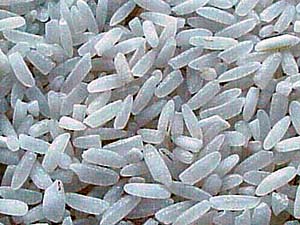
Using the outcomes from this research, the researchers will investigate ways to enhance folate production in cereals, and root and tuber crops. If successful, rice, potato and other crops low in folates could be biofortified with increased folate levels.