
Record current issueAssembly Series

Gargoyle

  -  Faculty Experts


  -  News by Topic

  -  News by School


Search News & Info


WUSTL in the News
  - Powered by Google


WUSTL Home

Public Affairs Home

News
Releases

University News

Medical News

Sports News

Radio Service

Tip Sheets

Business, Law & Econ

Culture & Living

Science & Technology
Media Resources
Contact Information

TV/Radio Studio

Visiting Our Campuses

Campus Images

Sports photography
Commercial Filming
   and Photography


Commercial Use of
   Names and Symbols

Domain Name policy
WUSTL Information
Record (newspaper)

Campus Calendars

WUSTL News Summary

Publications Online

Facts, Guides & Maps


Washington University in St. Louis News & Information > News Tips >

Working memory key to breakthroughs in cognitive neuroscience

By Gerry Everding

April 3, 2006 -- Unraveling the mysteries of the human brain, and the mind it gives rise to, is within the reach of modern science, but reaching this elusive destination will require a comprehensive and carefully charted roadmap, suggests a forthcoming special issue of the journal Neuroscience.

The issue, scheduled for publication in late April, provides an intriguing look at how researchers from a range of cognitive neuroscience disciplines are slowly but steadily piecing together the complex puzzle of how the human brain operates, revealing how incredibly sophisticated working memory processes — from the firing of a single neuron to the activation of multiple brain regions — help shape our understanding of and our interactions with the world around us.
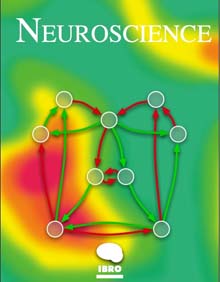
A central unifying argument of the issue is that the pace of future breakthroughs in mind-brain research hinges on the development of a systematic and purposeful plan for the integration and coordination of an overwhelming array of exciting new knowledge being generated by researchers across the cognitive neurosciences.

"Multidisciplinary research within cognitive neuroscience has established itself as a promising approach to answering the question of how the mind emerges from the working of the brain," suggests Grega Repovs, Ph.D., co-editor of the journal issue and a visiting post-doctoral fellow in the Department of Psychology in Arts & Sciences at Washington University in St. Louis.

"One of the fields that has gained substantially by successfully combining the theoretical frameworks, methodologies, empirical results and insights of the varied disciplines within cognitive neuroscience, is the study of working memory," he adds. "The aim of this special issue is to present the state-of-the-art in the cognitive neuroscience of working memory and to foster further efforts in developing interdisciplinary research, as well as interdisciplinary exchange of ideas and findings."

Evolution of complex theories

Writing in a journal prologue, Repovs and co-editor Maja Bresjanac, both on faculty at the University of Ljubljana in Slovenia, trace the evolution of increasingly complex theories regarding the critical role working memory plays in high-level cognitive functions, and suggest that new breakthroughs are becoming more and more dependent on a multidisciplinary approach.

While the study of human mind and brain has never been limited to one scientific discipline, the rise of common cognitive paradigms, such as the popular "brain as an information processing machine" metaphor, has provided researchers with much-needed conceptual systems through which the findings of various disciplines can be related and combined.

Cognitive psychologists are now building computational models and computer simulations to test theories developed through experimental observation. Neuropsychologists are using models of normal brain function to explain cognitive problems associated with brain damage or disease and to plan appropriate intervention or rehabilitation programs. Neuroscientists are using models of functional brain architecture to pinpoint brain structures likely relevant to specific cognitive functions, a process that may provide cognitive psychologists with important ideas and constraints for evolving theories.

"Even though combination and confrontation of evidence from different fields of cognitive neuroscience enabled some important breakthroughs, it is not always practiced or even readily accepted," the co-editors contend. "A systematic research framework that would propose a way to coordinate research efforts and encourage consideration of findings from different fields of cognitive neuroscience when developing theories of human brain and mind might therefore be helpful."

Pyramid approach

Building on an existing triangle framework for interdisciplinary cognitive neuroscience research, Repovs and Bresjanac propose a pyramid approach in which four lines of research have to be considered when developing comprehensive models of mind/brain.

Grega Repovs
Grega Repovs

First, the capacities and properties that the model is to explain need to be described in detail and a functional architecture by virtue of which the mind/brain enables the person to have those properties and capacities needs to be put forward. This is the role of cognitive psychology.

Second, working computational models of cognitive functions that specify in detail the proposed theoretical assumptions and are based on known neurobiology of the brain need to be built. That is the domain of computational science.

Third, the actual anatomical structure and physiology of the brain need to be taken into account to be able to explain how the cognitive functions are actually instantiated in the brain. That is the purview of neuroscience.

Fourth, cognitive dysfunctions following specific brain damage caused either by brain injury, neurological or psychiatrical disease, need to be studied to provide further constraints and tests of the theory. That is the realm of cognitive neuropsychology and neuropsychiatry.

"Each of the stated lines of inquiry contributes unique and necessary information," Repovs and Bresjanac suggest. "This is the framework we adopted as the backbone of the issue."

To illustrate the benefits of an interdisciplinary framework, the special issue of Neuroscience showcases of some of the latest and most promising research into various aspects of working memory function, showing how researchers from diverse sub-disciplines are attempting in their own way to answer key common questions:

• What are the properties, capabilities and limitations of working memory?

• What can we learn of working memory from its dysfunctions?

• What are the cortical areas and the neural activity related to working memory?

• What are the molecular/cellular bases of working memory?

• What can computer models and simulations reveal about the working memory?

"Today," the co-editors conclude, "we are able to describe the functional properties of the working memory and its subsystems, we are identifying the brain regions involved in the storage and manipulation of information in working memory, and are starting to understand the functional networks that they form, we are gaining understanding of the neuronal representational codes and the roles of respective neurotransmitters, we are building computer simulations that could enable us to understand and predict the complex mechanisms involved.

"More than ever, interdisciplinary collaboration could provide us with new major insights into this important cognitive ability."


View Current: Business, Law & Economics | Culture & Living | Medical Science & Health | Science & Technology


Related Information
Media Assistance:

Gerry Everding
Exec. Director of News and Electronic Communications
gerry_everding@wustl.edu

(314) 935-5230
Contact Information

Related Links:
Neuroscience, the official journal of The International Brain Research Organisation
Neuroscience special issue on Cognitive Neuroscience of Working Memory

Related Groups:

Departments:
Psychology

- View All Groups

Related Topics:
Aging and Mental Health
Alzheimer's Disease / Memory
Brain / Neuro / Spinal
Mental Health / Illness
Psychology

- View All Topics

Revised:

Thursday, May 4, 2006


  Email this page

  Print ready page


News & Information  |   Medical News  |   Office of Public Affairs  |   WUSTL Home

Please contact us and let us know how we can assist you.
Technical problems with this Web site? Email questions or comments.
Please review the WUSTL News & Information copyright/privacy policy.