Record current issueAssembly Series

Gargoyle

  -  Faculty Experts


  -  News by Topic

  -  News by School


Search News & Info


WUSTL in the News
  - Powered by Google


WUSTL Home

Public Affairs Home

News
Releases

University News

Medical News

Sports News

Radio Service

Tip Sheets

Business, Law & Econ

Culture & Living

Science & Technology
Media Resources
Contact Information

TV/Radio Studio

Visiting Our Campuses

Campus Images

Sports photography
Commercial Filming
   and Photography


Commercial Use of
   Names and Symbols

Domain Name policy
WUSTL Information
Record (newspaper)

Campus Calendars

WUSTL News Summary

Publications Online

Facts, Guides & Maps


Washington University in St. Louis News & Information > Faculty Experts at Washington University in St. Louis >

Samuel Stanley

Director of the Midwest Regional Center of Excellence for Biodefense and Emerging Infectious Diseases Research

Expertise: biodefense, infectious diseases

Bio:
Stanley
Stanley
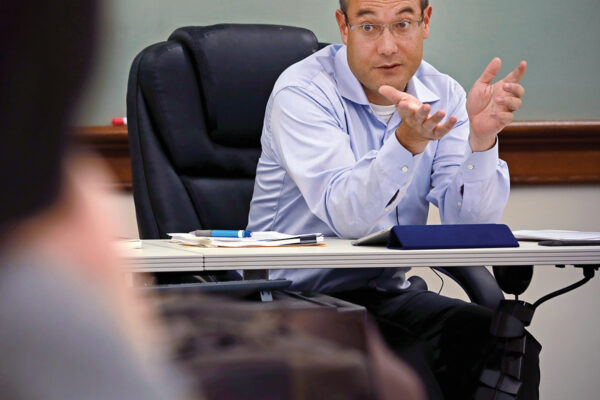
Stanley directs the Midwest Regional Center of Excellence for Biodefense and Emerging Infectious Diseases Research (MRCE), funded by a $35 million grant from the National Institute of Allergy and Infectious Diseases. The center's mission is to support basic and translational research in critical areas of biodefense and emerging infectious diseases throughout the Midwest, which includes Missouri, Iowa, Nebraska and Kansas. The center will concentrate on expanding current research efforts in biodefense, identifying new areas of need in the field and expanding facilities to support biodefense research.


News Stories & Tip Sheets:

Showing Stories 1 through 5 of 9.  - Show More
NIH extends biodefense funding

$37 million to extend regional biodefense and emerging infectious diseases research

June 24, 2009 -- The National Institutes of Health (NIH) has extended funding for the Midwest Regional Center for Excellence in Biodefense and Emerging Infectious Diseases (MRCE), anchored at the School of Medicine. The center received a five-year, $37 million grant from the National Institute of Allergy and Infectious Diseases (NIAID) to continue to support basic and translational research in biodefense and emerging infectious diseases throughout the Midwest.


NIH to set women's health research priorities

WU hosts public hearing, conference to help NIH prioritize women's health research

Feb. 16, 2009 -- What are your priorities for women's health research? The National Institutes of Health (NIH) wants to know. Washington University will host a national meeting March 4-6 on behalf of the NIH Office of Research in Women's Health as it begins to develop research priorities for the next decade.


????

Stanley targets infectious disease, helps faculty meet research goal

Feb. 1, 2008 -- Located smack in the middle of the United States, St. Louis seems an unlikely place to study tropical diseases typically found half a world away in Africa and Asia. But when Samuel L. Stanley Jr., M.D., came to Washington University as a fellow in 1983, he knew he wanted to devote his career to tropical diseases, having spent time treating patients in Africa as a Harvard medical student.


Research!America

Samuel Stanley named global health research ambassador

July 11, 2007 --
Stanley
Stanley
Download
Samuel Stanley, vice chancellor of research, has been named an Ambassador in Research!America's Paul G. Rogers Society for Global Health Research. Stanley is now one of 50 of the nation's foremost global health experts who have joined forces to increase awareness about the critical need for greater U.S. public and private investment in research to improve global health.


DNA differences

Fever after smallpox vaccination tied to individual genetic variations

June 18, 2007 -- St. Louis researchers have identified common DNA variations that underlie susceptibility to fever after smallpox vaccination. Their finding is the first to link individual differences written into the genetic code with a vaccine-related complication - albeit a mild one. Most of the eight genetic alterations the scientists identified increased the likelihood of fever after smallpox vaccination. A few, however, reduced fever risk.


Showing Stories 1 through 5 of 9.  - Show More

Related Information
Media Assistance:

Joe Angeles
Director, WUSTL Photographic Services
joeangeles@wustl.edu

(314) 935-5217
Contact Information

Related Groups:

Schools:
School of Medicine

Departments:
Medicine

Programs:
Infectious Disease

- View All Groups

Related Topics:
Bioterrorism
Homeland and International Security
Medical Science
War / Terrorism

- View All Topics

Revised:

Tuesday, Jan. 24, 2006


  Email this page

  Print ready page


News & Information  |   Medical News  |   Office of Public Affairs  |   WUSTL Home

Please contact us and let us know how we can assist you.
Technical problems with this Web site? Email questions or comments.
Please review the WUSTL News & Information copyright/privacy policy.