Washington University in St. Louis News & Information > Faculty Experts at Washington University in St. Louis >

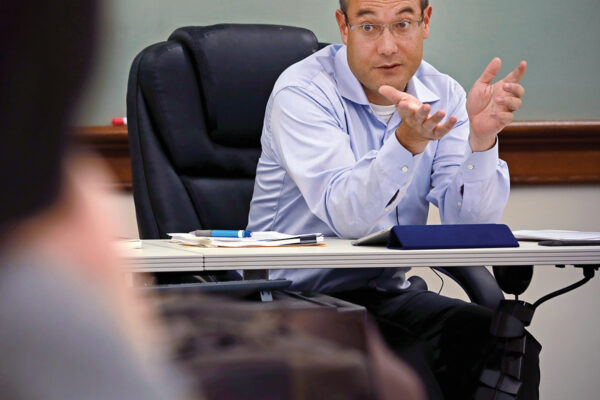
Herbert S. Hadley Professor of Social Welfare
Expertise: social policy, poverty, social welfare, social stratification, family, demography, research methodology
Bio:
Rank's work centers on poverty, social welfare, economic inequality and policy, including the use of welfare myths, class division and economic inequalities as political campaign issues. His recent research has explored the life course probabilities of experiencing poverty in America. His most recent book, One Nation, Underprivileged: Why American Poverty Affects Us All was published by Oxford University Press in 2004. The recipient of the Outstanding Research Award from the Society of Social Work and Research, Rank has written numerous articles for a variety of distinguished journals such as Social Work, American Sociological Review, Psychological Science, and Social Science Quarterly.
WUSTL Contact Information:
|
|
| E-mail: | markr@wustl.edu |
| Address: | One Brookings Drive Campus Box 1196 St. Louis, MO 63130
|
|
Education:
-
Ph.D. in Sociology at University of Wisconsin, Madison

| News Stories & Tip Sheets: |
Showing Stories 1 through 5 of 9.
- Show More |
 |
Holiday cheer or holiday hunger?
 Nearly half of all U.S. children will use food stamps, says poverty expert

Nov. 2,
2009 -- Holidays and tables full of delicious food usually go hand in hand, but for nearly half of the children in the United States, this is not guaranteed. "49 percent of all U.S. children will be in a household that uses food stamps at some point during their childhood," says Mark R. Rank, Ph.D., poverty expert at the George Warren Brown School of Social Work at Washington University in St. Louis. "Food stamp use is a clear sign of poverty and food insecurity, two of the most detrimental economic conditions affecting a child's health." Rank's study, "Estimating the Risk of Food Stamp Use and Impoverishment During Childhood," is published in the current issue of the Archives of Pediatrics & Adolescent Medicine. Video available.

|
Economic racial divide in the U.S. — Are we over race?
 Widening gap exists in key factors for economic well-being, according to new study

July 15,
2009 -- "With President Obama now approaching six months in office, some have suggested that we have gone beyond race as a major dividing line in society. Yet nothing could be further from the truth," says Mark R. Rank, Ph.D., professor of social work at Washington University in St. Louis. "One of the fundamental fault lines in American society continues to be the ongoing racial disparities in economic well-being." Using 30 years of data, Rank examined three key factors in attaining economic well-being: owning a home and building equity; attaining affluence and avoiding poverty; and possessing enough assets to survive economic turmoil, or a "rainy day fund." "The results indicate that within each area, the economic racial divide across the American life course is immense," Rank says.

|
Multimedia coverage from television to twitter
 WUSTL professors offer analysis on election night

Nov. 4,
2008 -- Election night media coverage will feature three professors from Washington University on KETC-TV, Channel 9. The professors will be among local political experts and citizens invited to participate in the station's multimedia collaboration with the St. Louis Beacon, an online journal.

|
The fragility of the "American Dream"
 New research reveals surprising lifetime risk of economic insecurity among Americans

April 30,
2008 -- Recent economic events have shaken the confidence of many Americans with respect to their ability to achieve the "American dream." "With rising numbers of home foreclosures, job cuts, and loss of savings, more Americans are encountering severe periods of economic risk and insecurity in their lives," says Mark R. Rank, Ph.D., poverty expert and professor of social work at Washington University in St. Louis.

|
A question too many ask: Will I go hungry?
 High rates of food insecurity, food stamp use show Americans' economic vulnerability, says social welfare expert

Sept. 22,
2004 --
 |
| Many Americans are faced with the fear of going hungry. |
Most Americans don't think they'll ever be faced with the question of how they will get their next meal, but a recent study co-authored by a social welfare expert at Washington University in St. Louis shows that at least 42 percent of the U.S. population will deal with food insecurity during their lifetime. "Food insecurity goes beyond the fear of going hungry," explains Mark R. Rank, Ph.D., the Herbert S. Hadley Professor of Social Welfare at the university's George Warren Brown School of Social Work. "Food insecurity means that people are unable to provide themselves and their families nutritionally adequate food on a regular basis.

|
Showing Stories 1 through 5 of 9.
- Show More |
 |
Despite everything . . . Americans are seeing better times ahead
USA Today
and 2 others

June 23,
2009 -- Americans say they're still in a tunnel, but more are beginning to see a light at its end. Fewer people say they've prospered over the past year than in decades, a USA TODAY/Gallup Poll finds. WUSTL social work professor Mark Rank comments on the 'American Dream.'

|
Retirement Cash: Will You Have Enough?
Readers Digest (NY)

Sept. 7,
2007 -- There's a gap between the dream of retirement and the reality Americans face. A recent study from WUSTL School of Social Work estimates that 4 out of 10 people over age 60 will fall below the poverty line at some point in their later years. Countless more will watch their dream retirement fade as they discover that their savings barely cover their immediate needs. But the prospect of fiscal free fall has yet to alter most Americans' behavior, and baby boomers are saving a scant third of what they'll need.

|
In N.Va., Let Down By a Rising Economy
Washington Post, Seattle Times
and 5 others

Feb. 28,
2007 -- Article looks at a growing underside of the vibrant, rapidly shifting economy of northern Virginia, where the high cost of housing and the unpredictable nature of the job market can plunge workers into poverty and homelessness.
The situation in northern Virginia is similar to those surfacing nationwide.
WUSTL social work professor Mark Rank is one of the experts commenting.

|
Additional Background:
Professor Rank is the recipient of numerous awards, including the Annual Faculty Teaching Award from the Council of Students of Arts and Sciences, the Feldman Award from the Groves Conference on Marriage and the Family, the Founders Day Distinguished Faculty Award from the Washington University Alumni Board of Governors, the Faculty Award to Improve Learning from the William T. Kemper Foundation, and the Outstanding Research Award from the Society for Social Work and Research. He has also been listed in Who's Who in America and Who's Who Among America's Teachers: The Best Teachers in America Selected by the Best Students.
Dr. Rank's research has been reported in a wide range of outlets including The New York Times, The Washington Post, The Wall Street Journal, The Los Angeles Times, The Christian Science Monitor, The Chicago Tribune, USA Today, The Chronicle of Higher Education, The Voice of America, National Public Radio, and Good Morning America. He has provided his research expertise to members of the U.S. Senate and House of Representatives, as well as many national organizations involved in issues of economic and social justice.
|