|
|  |
Washington University in St. Louis News & Information > Faculty Experts at Washington University in St. Louis >

Professor of Psychology
Expertise: memory, conscious, aging, social psychology, memory rehabilitation, neural
Bio:
 |
| Jacoby |
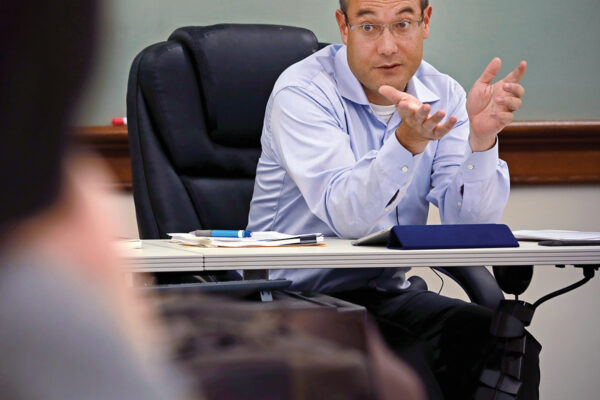
Jacoby conducts research that focuses on the distinction between consciously-controlled and automatic processes. Jacoby uses techniques that separate these two components of responding to forms of memory, which are relatively uninfluenced by aging, to explore neural bases of memory. The distinction is useful for better understanding age-related differences in memory performance, and for improved diagnosis and treatment of memory deficits. Other research extends the conscious/automatic distinction to issues in the domain of social psychology and seeks to identify brain-based differences for the types of processes. Interest in subjective experience has led to investigations of memory illusions (e.g., why memory can make a room seem less noisy). A goal of his research is to develop procedures for rehabilitating memory. He is also interested in various problems in social psychology. Jacoby's research is supported by funding from the National Institute of Aging.
WUSTL Contact Information:
Education:
-
Ph.D. in Psychology at Southern Illinois University
-
B.S. in Psychology at Washburn University

| News Stories & Tip Sheets: |
Showing 2 Stories.
|
 |
Get it in writing
 Scam artists exploit elders' vulnerability to false memories

June 8,
2005 --
 |
| Older folks can be swayed by the power of suggestion. |
Especially if you're older, get everything in writing, from estimates to receipts. Psychologists at Washington University in St. Louis report that the memory function of people in their mid-60s and up is easily swayed by the power of suggestion, making them more vulnerable to memory-related scams. Their study appears in the May 2005 issue of the Journal of Experimental Psychology(JEP): General, which is published by the American Psychological Association.

|
Teach your children well
 Old habits, both good and bad, are hard to break, suggests study of human memory

Nov. 11,
2004 --
 |
| Is this a "cup" or a "mug?" |
No matter how hard we try to change our behaviors, it's the old ways that tend to win out over time, especially in situations where we're rushed, stressed or overworked, suggests a new study of human memory from Washington University in St. Louis. The findings are bad news for people struggling to change harmful behaviors, such as smoking or overeating, and good news for people who establish healthy lifestyles at an early age. Even when we consciously try to put new good intentions into place, those previously learned habits remain stronger in more automatic, unconscious forms of memory.

|
Showing 2 Stories.
|
 |
| Clips: |
Showing 2 Clips.
|
 |
Memory errors cost elderly
The Times (London), SeniorJournal.com
and 1 others

May 16,
2005 -- According to research by WUSTL psychologists Larry Jacoby, Anthony Bishara, Sandra Hessels, and Jeffrey Toth, people aged over 60 are ten times more likely than young adults to make memory errors that leave them vulnerable to scams. Con artists "prime" a target by alluding to something that has happened, but changing details such as price. Older people, the research suggests in the Journal of Experimental Psychology, are less likely to remember the deal correctly.

|
Deja vu: If it all seems familiar, there may be a reason
New York Times

Sept. 14,
2004 -- New research on memory has opened a promising window on the phenomenon known as Deja Vu, providing both possible explanations for the sensation and novel ways to create and measure it. This article mentions experiments by Larry Jacoby, professor of psychology in Arts & Sciences.

|
|
|  |
|