Record current issueAssembly Series

Gargoyle

  -  Faculty Experts


  -  News by Topic

  -  News by School


Search News & Info


WUSTL in the News
  - Powered by Google


WUSTL Home

Public Affairs Home

News
Releases

University News

Medical News

Sports News

Radio Service

Tip Sheets

Business, Law & Econ

Culture & Living

Science & Technology
Media Resources
Contact Information

TV/Radio Studio

Visiting Our Campuses

Campus Images

Sports photography
Commercial Filming
   and Photography


Commercial Use of
   Names and Symbols

Domain Name policy
WUSTL Information
Record (newspaper)

Campus Calendars

WUSTL News Summary

Publications Online

Facts, Guides & Maps


Washington University in St. Louis News & Information > Faculty Experts at Washington University in St. Louis >

Garland E. Allen

Professor of Biology in Arts & Sciences

Expertise: eugenics, history, history of evolution, history of genetics, history of sciene, philosophy and sociology of biology

Bio:
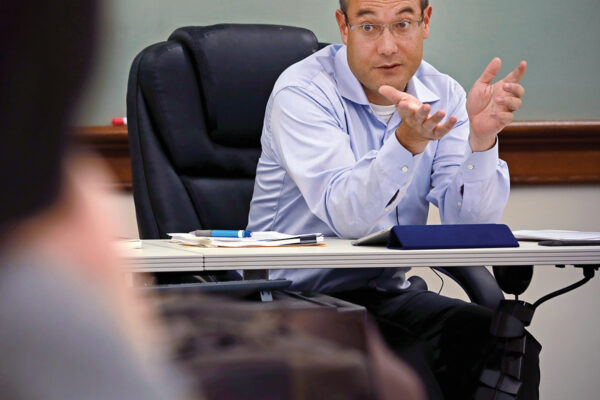
Garland Allen
Garland Allen
Download
Allen is a historian of science. The major focus of his present research is on the history of genetics and its relationship to eugenics and agriculture in the United States between 1900 and 1950. In addition to an interest in Mendelian genetics, agriculturists and eugenicists also believed that the principles of animal and plant breeding could be applied to managing human evolution. Allen is exploring the funding and institutional base for eugenics: who paid for it, what were their motives, and what was the sort of scientific (genetic) basis for eugenic arguments. The major goal of this work is to place eugenics in its historical context, and to explore its implications for society today.

WUSTL Contact Information:
Work:(314) 935-6808
Fax:(314) 935-4434
E-mail:allen@biology.wustl.edu
Address:Campus Box 1137
One Brookings Dr.
St. Louis, MO 63130

Education:
  • Ph.D. at Harvard University
  • M.A. at Harvard University
  • B.A. at University of Louisville


News Stories & Tip Sheets:

Showing 3 Stories.
British scholar Janet Browne explores Darwin

British scholar Janet Browne explores Charles Darwin and the economy of nature for the Assembly Series

Nov. 5, 2007 -- British historian of science Janet Browne continues to explore Darwin's evolutionary idea.


Burkhardt speaks on ethology

Historian Richard Burkhardt to speak on the modern development of ethology for the Assembly Series

Oct. 17, 2005 -- Richard Burkhardt will examine the scientific, social and political aspects in the development of ethology as a modern science in his Thomas Hall Lecture at 4 p.m. on October 25. He teaches history at the University of Illinois at Urbana-Champaign and specializes in the history of evolutionary theory and ethology, which is the study of animal behavior by means of comparative zoological methods.


Climate is right for 're-packaged' eugenics

Social problems such as obesity can't be solved through genetics alone, warns biologist

May 4, 2004 --
Could there be a link between the obesity epidemic and eugenic thinking? A historian of science at Washington University in St. Louis poses the question.
Photo courtesy University of Iowa
Could there be a link between the obesity epidemic and eugenic thinking? A historian of science at Washington University in St. Louis poses the question.
As obesity rates continue to grow in the United States, threatening the health of millions of Americans, a historian of science warns that social problems such as this cannot be solved through science, especially genetics, alone. In this new "gene age" in which large amounts of research funds are used for studies on the genetics of such complex social traits as alcoholism, criminality or obesity, for example, Garland E. Allen, Ph.D., professor of biology in Arts & Sciences at Washington University in St. Louis, says the climate is ripe for a "re-packaged" eugenics in American society. Allen points out that 100 years ago, eugenics, a movement that claimed many social, personality and mental traits were hereditary, was emerging as a major social movement in Europe and the United States. His concern: it might well still be with us today.


Showing 3 Stories.

Related Information
Media Assistance:

Tony Fitzpatrick
Senior Science Editor
tony_fitzpatrick@wustl.edu

(314) 935-5272
Related Links:
Allen's Web site
The Evolution, Ecology and Population Biology Program

Related Groups:

Departments:
Biology

- View All Groups

Related Topics:
Evolution
Genetics
Life Sciences
Medical Genetics
Race / Gender Issues

- View All Topics

Revised:

Thursday, Oct. 11, 2007


  Email this page

  Print ready page


News & Information  |   Medical News  |   Office of Public Affairs  |   WUSTL Home

Please contact us and let us know how we can assist you.
Technical problems with this Web site? Email questions or comments.
Please review the WUSTL News & Information copyright/privacy policy.