|
|  |
Washington University in St. Louis News & Information > Faculty Experts at Washington University in St. Louis >

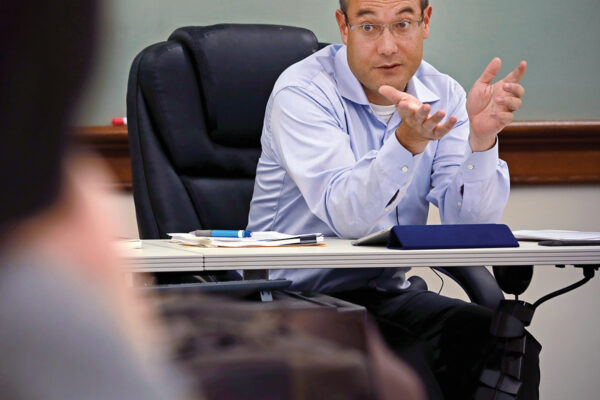
Assistant Professor of Psychology in Arts & Sciences
Expertise: Alzheimer's disease, attachment bonds, clinical psychology of aging, death and dying, dementia, depression, doctor-patient communication, families, family dynamics in late life, gerontology education, hospice, intergenerational relationships, long-term care, mental health in old age, older adults, psychotherapy with older adults
Bio:
Carpenter's research focuses on the clinical psychology of aging, with an emphasis on family relationships in late life. Recent work explores the ways family members work together to make decisions regarding older adults. Other studies have examined whether adult children really know what their older parents want, including whether they can accurately predict an older parent's preferences for medical care, housing, transportation, social activities and end-of-life care. Additional interests include doctor-older patient communication, dementia and Alzheimer's disease, hospice care, and death and dying.
WUSTL Contact Information:
| Work: | (314) 935-8212 |
| Fax: | (314) 935-7588 |
| Alt: | (314) 935-6173 |
|
| E-mail: | bcarpenter@wustl.edu |
| Address: | Campus Box 1125 One Brookings Dr. Washington University in St. Louis St. Louis, MO 63130
|
|
Education:
-
Ph.D. in Clinical Psychology at Case Western Reserve University, Cleveland, OH
-
B.A. in English/Psychology at Williams College, Williamstown, MA
-
PostDoc in Clinical Psychology at Philadelphia Geriatric Center
-
PostDoc in Geriatric Psychiatry at University of Pennsylvania

| News Stories & Tip Sheets: |
Showing 4 Stories.
|
 |
Telling it like it is
 Dementia diagnosis brings relief, not depression

March 3,
2008 --
 |
| Emotional concerns are a serious consideration with the diagnosis of dementia. |
When it comes to a diagnosis of Alzheimer's disease, what you don't know may not kill you, but knowing the truth as soon as possible appears to be the better approach — one that may improve the emotional well-being of both patients and their caregivers, suggests new research from Washington University in St. Louis.

|
Knock-knock
 Researchers find older folks don't get the joke

July 11,
2007 -- It's no laughing matter that older adults have a tougher time understanding basic jokes than do younger adults. It's partially due to a cognitive decline associated with age, according to Washington University in St. Louis researchers Wingyun Mak, a graduate student in psychology in Arts & Sciences, and Brian Carpenter, Ph.D., Washington University associate professor of psychology.

|
Disclosing a dementia diagnosis
 No consensus on when, how, by whom even if Alzheimer's patients are told of their disease

June 9,
2004 --
 |
| Photo courtesy of Alzheimer's Association, St. Louis Chapter |
| A WUSTL psychologist says there is little consensus among doctors when it comes to disclosing a dementia diagnosis to patients and their caregivers. |
To tell or not to tell, that is the question. Should Alzheimer's disease patients be told of the diagnosis? If so, when, how and by whom? Brian D. Carpenter, Ph.D., an assistant professor of psychology in Arts & Sciences at Washington University in St. Louis, conducted a review of related study literature that shows there is little consensus among clinicians on the issue of disclosing a dementia diagnosis and great room for much more research. Carpenter's review, done with research assistant Jennifer Dave, was published in the April 2004 issue of The Gerontologist. "If contemporary debate and practice are any indication, there is no consensus on these matters," Carpenter says in the article "Disclosing a Dementia Diagnosis: A Review of Opinion and Practice, and a Proposed Research Agenda."

|
Advice to the sandwich generation:
 Be prepared to deal with parents' aging before a crisis hits

Oct. 2,
2003 --
 |
| U.S. Administration on Aging |
| Aging is a women's issue because women provide the bulk of care and support to older adults. |
Download
|
An aging parent wants to keep the car keys, while his adult daughter thinks he is a hazard to himself and others on the road. Or a widow who has lived in her home for 55 years refuses to move out, although her children worry that she's too frail to manage the stairs. As more and more adult children face caring for their aging parents in the coming decades, an expert on the clinical psychology of aging says the key to dealing with these types of situations is to discuss them before they become a reality. "Don't procrastinate," says Brian D. Carpenter, Ph.D., an assistant professor of psychology in Arts & Sciences at Washington University in St. Louis. "Start the process of talking to your aging parents early — before a crisis."

|
Showing 4 Stories.
|
 |
Dementia Diagnosis May Relieve Patients
Associated Press
and 110 others

March 13,
2008 -- Doctors often hesitate to tell patients they likely suffer from Alzheimer's disease or another form of dementia, fearing the news will overwhelm them.
Not only did the diagnosis not increase anxiety or depression among patients and their caregivers, but most were relieved to have symptoms explained and a way to find help.
But a WUSTL medical study suggests physicians need not worry. Researchers amd WUSTL psychology professor Brian Carpenter and neurology proessor John Morris comment.
The study, which appears in the March issue of the Journal of the American Geriatrics Society, gauged depression and anxiety two days before and two days after an evaluation and diagnosis.

|
Humor Hampered By Aging Brain?
CBSNews.com
and 1 others

Aug. 6,
2007 -- Age-related brain changes may make it harder for older adults to understand humor, a new study shows.
The study comes from WUSTL psychology graduate student Wingyun Mak and psychology professor Brian Carpenter.

|
Joke comprehension may decrease with age, study at St. Louis university suggests
International Herald Tribune (France)
and 206 others

July 11,
2007 -- It's no laughing matter: a new study suggests older adults have a harder time getting jokes as they age.
The research indicates that because older adults may have greater difficulty with cognitive flexibility, abstract reasoning and short-term memory, they also have greater difficulty with tests of humor comprehension.
The research conducted by WUSTL graduate student Wingyun Mak and WUSTL psychology professor Brian Carpenter.
Findings were published earlier this month in the Journal of the International Neuropsychological Society.

|
Additional Background: Awards and Honors
- Washington University Kemper Grant for Teaching Enhancement (2001)
- American Psychological Association Division 12/Section II Student Research Award (1997)
- Marie Haug Student Award of the University Center on Aging and Health (1997)
- American Psychological Association Division 20/Retirement Research Fund Graduate Research Proposal Award (1996)
- Graduate Dean's Instructional Excellence Award (1994)
Funded Research Grants
- Patient-valued outcomes: Concordance within families. Principal Investigator. Washington University Alzheimer's Disease Research Center / NIA, 5/1/01 - 4/30/02.
- Early parent-child relationships and contemporary interactions. Principal Investigator. John D. & Catherine T. MacArthur Foundation, 4/1/00 - 10/31/00.
- Intergenerational awareness of psychosocial preferences. Principal Investigator. Fan Fox & Leslie R. Samuels Foundation, 4/1/99 - 12/31/00.
- Attachment bonds between adult daughters and their older mothers: Associations with different types of caregiving. Principal Investigator. Retirement Research Foundation, 1996 -1997.
Selected Publications
Carpenter, B. D. (In press). Family, peer, and staff social support in nursing home patients: Contributions to psychological well-being. Journal of Applied Gerontology.
Carpenter, B. D. (2001). Attachment bonds between adult daughters and their older mothers: Associations with contemporary caregiving. Journals of Gerontology, 56B, P257-P267.
Carpenter, B. D., Van Haitsma, K., Ruckdeschel, K., & Lawton, M. P. (2000). The psychosocial preferences of older adults: A pilot examination of content and structure. The Gerontologist, 40, 335-348
Carpenter, B. D., Ruckdeschel, H., Van Haitsma, K., & Ruckdeschel, K. (2000). R-E-M: A psychotherapy for institutional residents with depression and dementia. In C. I. Wright (Ed.), Mental health and aging: Meeting new challenges (pp. 18-22). Syracuse, NY: New York Statewide Resource Center for Geriatric Education.
Carpenter, B. D. (1996). Why students are interested in the elderly: An analysis of motives. Gerontology & Geriatrics Education, 16, 41-51.
Carpenter, B. D., Strauss, M. E., & Kennedy, J. S. (1995). Personal history of depression and its appearance in Alzheimer's. International Journal of Geriatric Psychiatry, 10, 669-678.
Carpenter, B. D. (1993). A review and new look at ethical suicide in advanced age. The Gerontologist, 33(3), 359-365.
Selected Presentations
Carpenter, B. D. (2001). Intergenerational discrepancies in perceptions of family dynamics and parental preferences. Poster presented at the Annual Meeting of the Gerontological Society of America, Chicago, IL.
Carpenter, B. D., Van Haitsma, K., Ruckdeschel, H., & Lawton, M. P. (November, 1999). The structure and ranking of psychosocial preferences: Older gerontologists differ from other elders. Poster presented at the Annual Meeting of the Gerontological Society of America, San Francisco, CA.
Carpenter, B. D. (1999). Intergenerational Awareness of Psychosocial Preferences. Paper presented at the Delaware Valley Geriatric Society Annual Research Papers Presentation, Philadelphia, PA.
Carpenter, B. D. (1998). Work status and adult attachment bonds: Effects on older adult caregiving. Paper presented at The Gerontological Society of American Annual Scientific Meeting, Philadelphia, PA.
Carpenter, B. D. (1997). Attachment bonds and caregiving for older parents. Paper presented at The Gerontological Society of America Annual Scientific Meeting, Cincinnati, OH.
Carpenter, B. D. (1996). Filial obligation, ethnicity, and caregiving. Poster presented at The Gerontological Society of America Annual Scientific Meeting, Washington, DC.
Professional Memberships
- American Psychological Association; Division 12, Section II, Clinical Geropsychology; Division 20, Adult Development and Aging
- Gerontological Society of America
- American Society on Aging
- Lesbian and Gay Aging Issues Network
|
|  |
|