Record current issueAssembly Series

Gargoyle

  -  Faculty Experts


  -  News by Topic

  -  News by School


Search News & Info


WUSTL in the News
  - Powered by Google


WUSTL Home

Public Affairs Home

News
Releases

University News

Medical News

Sports News

Radio Service

Tip Sheets

Business, Law & Econ

Culture & Living

Science & Technology
Media Resources
Contact Information

TV/Radio Studio

Visiting Our Campuses

Campus Images

Sports photography
Commercial Filming
   and Photography


Commercial Use of
   Names and Symbols

Domain Name policy
WUSTL Information
Record (newspaper)

Campus Calendars

WUSTL News Summary

Publications Online

Facts, Guides & Maps


Washington University in St. Louis News & Information > Faculty Experts at Washington University in St. Louis >

Robert L. Canfield

Professor of Sociocultural Anthropology in Arts & Sciences

Expertise: Islamic politics, U.S. anti-terrorism policy, Afghanistan, Pakistan, Iran, Central Asia, Eastern Islamic World, Turko-Persian, Hazarajat of Afghanistan, Osama bin Laden, Taliban, ethnicity and symbolism, historical anthropology, peasant society, political anthropology, historical anthropology

Bio:
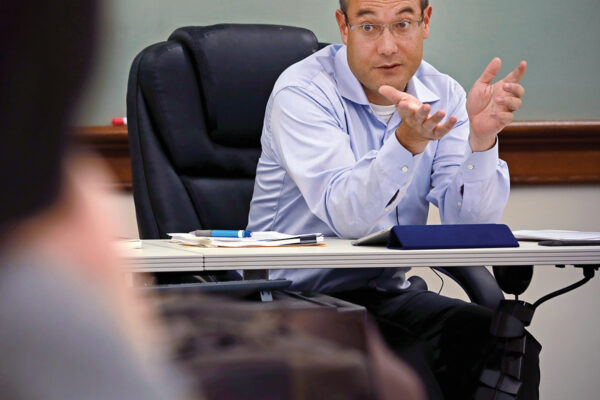
Robert Canfield
Robert Canfield
Download
Canfield, a sociocultural anthropologist, spent nine years in Afghanistan. His research focuses on Islamic movements in Afghanistan and Pakistan. He supports the U.S. war in Afghanistan, but has been highly critical of the Bush administration regardin the war in Iraq. Canfield, who has studied Islamic identity issues in Central Asia since the early 1990s, says it's important that people understand that much of Afghanistan is itself in opposition to the activities of both Osama bin Laden and the Taliban. Canfield teaches a course on Greater Central Asia: History, Culture and Politics, which focuses on contemporary issues in the ex-Soviet republics of Central Asia and Iran, Afghanistan, and Pakistan, but it also includes extensive reading on the social history of the region, in order to enable understanding of the social dynamics at work in the region. In 1990 he was a consultant for the Agency for International Development - Representative to Afghanistan, in Pakistan, to develop a strategy for encouraging democratic institutions among the Afghanistan peoples.

WUSTL Contact Information:
Work:(314) 935-5282
Fax:(314) 935-8535
E-mail:canfrobt@artsci.wustl.edu
Address:Campus Box 1114
One Brookings Drive
St. Louis, MO 63130

Education:
  • Ph.D. in Anthropology at University of Michigan
  • M.A. in Linguistics at University of Michigan
  • B.A. in Psychology at University of Tulsa


News Stories & Tip Sheets:

Showing 1 Stories.
'She represented the hope of a fresh break'

Anthropologist who lived in Pakistan comments on Benazir Bhutto's death

Dec. 27, 2007 -- The assassination of Benazir Bhutto is not only a great loss to Pakistan, but also a great loss to the world says a sociocultural anthropologist at Washington University in St. Louis who lived in Pakistan for six months and whose research focuses on Islamic movements in that country and in Afghanistan.


Showing 1 Stories.
Clips:

Showing 1 Clips.
Quran more than a book for Muslims
Knight Ridder/Tribune News Service and 16 others

May 19, 2005 -- Article explains why thousands of Muslims were pushed into deadly demonstrations last week over a now-discredited report about the mistreatment of the Koran. WUSTL anthropologist Robert Canfield, who spent nine years in Afghanistan, comments.


Additional Background: Canfield offers the following description of his research:

(Source: downloaded from his departmental Web site 11/2004)

My early research was the spatial conditions that shaped the alignment of local factions and coalitions in the Hazarajat of Afghanistan. But because Islamic categories provided the terms of political identification in this area, I later began working on Islam as the idiom of personal life and political affairs. I was engaged in this research when the Soviet invasion of Afghanistan deflected my attention to the Afghanistan War. During this period I wrote mainly about the Islamic orientation that informed the Afghan peoples' responses to the invasion and the structural forms through which they organized their resistance. I also wrote on the long-term geopolitical implications of the war.

Since the early 1980's, I have been working on the Islamic culture of the Central Asian region, notably to understand how Islamic idioms have taken root in the region to become the cultural forms through which individual experience has been understood and collective action justified and organized. I edited a book on the culture history of the eastern "Turko-Persian" Islamic world, and am writing a book on the distinctive patterns of coalition that have formed under the leadership of Islamic authorities in Afghanistan. I plan eventually to finish a work on the culture of suffering and efficacy among Afghan peasants.

I have recently supervised the following dissertations: The Cultural Construction of Class in the Pelion of Greece, and The Drama of the Passion: Symbolism, sentiment and Reality in Popayan, Colombia.

Courses:

The Shrinking Global Village: Transformations in the World System, Islamic Politics, Myth and Society, Culture and Identity, Anthropology and the Modern World, The Works and Ideas of Great Anthropologists, Monographs in Socio-Cultural Anthropology, Social Movements

Selected Publications:

1984 Islamic coalition in Bamian and the translation of Afghan political culture. In "Revolution and Rebellions in Afghanistan, 1978-1981." Pp. 211-219. Nazif Shahrani and Robert Canfield, eds. Institute of International Studies.

1985 Islamic sources of the resistance. "Orbis: A Journal of World Affairs" 29 (Spring): 57-7.

1989 The collision of evolutionary process and Islamic ideology in greater Central Asia. In "Afghanistan and the Soviet Union: Collision and Transformation." Hauner and Robert L. Canfield, eds. Boulder, Colorado: Westview Press.

1991 The Turko-Persian cultural tradition. In "Turko-Persia in Historical Perspective." New York: Cambridge University Press.

1992 Restructuring in greater Central Asia: Changing political configurations. "Asian Survey" 32:875-887.

2002 Symbol and Sentiment in Motivated Action. "In Language and Life: Essays in Memory of Kenneth L. Pike," Tom Headland, Mary Ruth Wise, and Ruth Brend, eds. Dallas: SIL International.

Education

B.A. 1952. Psychology. University of Tulsa

M.A. 1956. Linguistics. University of Michigan

Ph.D. 1971. Anthropology. University of Michigan

(Dissertation title: "Faction and Conversion in a Plural Society: Religious Alignments in the Hindu Kush.")

Special Training

Linguistics (Summer 1952), University of Oklahoma

Middle Eastern Politics and Society (Spring Term 1964), School of Oriental and African Studies, University of London.

Research Experience

1952-54, and 1957-60. Linguistic research on colloquial Kabul Persian. (in Kabul, Afghanistan)

1960. (6 months) Linguistic research on colloquial Kabul Persian. (Commissioned by Teachers College Columbia University, US/AID. Kabul)

1966-68. (24 months) Research on the social and cultural adaptm World). Edited by R. V. Weeks. Pp. 327-332. Westport, Connecticut: Greenwood.

1989. (6 months) Research on the social and cultural changes among the Afghanistan peoples as result of the Afghan - Soviet War. (USIA-Fulbright, in Peshawar, Pakistan)

Consulting Services

1972. Consultant for "Winter Caravan to the Roof of the World," National Geographic, April issue.

1972. Consultant for the map, "Peoples of the Middle East," National Geographic, July issue.

1988. Consultant as a Academic Specialist for the United States Information Service to advise on the establishment of a Center for the Study of Government among the Afghan refugees in Pakistan.

1990. Consultantship with the Agency for International Development - Representative to Afghanistan, in Pakistan, to develop a strategy for the encouragement of democratic institutions among the Afghanistan peoples.

Awards and Honorary Affiliations

National Defense Foreign Language Fellowships (for training in Persian), January 1964 to April 1966.

Foreign Area Training Fellowships (for field work in Afghanistan, 1966 to 1968, and for data sorting and dissertation writing, 1968-69.)

Afghanistan Studies and Research Program, University of Nebraska at Omaha, Research Associate. 1971-present.

National Endowment for the Humanities, 1974, Fellowship.

School of American Research, Santa Fe, NM 1982-83, Resident Scholar.

Center for Middle Eastern Studies, University of Chicago, 1985-pres., Associate Member.

United States Information Agency (USIA), March 1988, Academic Specialist Award

Editorial Board, Afghanistan Files, National Archives. 1988.

Fulbright Research Scholarship, Pakistan. International Exchange of Scholars. 1989

Professional Positions

1952-54. Teacher of English, Habibia College (Ministry of Education) Kabul, Afghanistan.

1956-57. U.S. Army. Full-time teacher of English and History. U.S. Armed Forces Institute. Schweinfurt, Germany.

1958-60. Teacher of English, English Language Program (Teachers College Columbia University, AID), Kabul, Afghanistan.

1960-63. Materials Director, English Language Program (Teachers College Columbia University, AID), Kabul, Afghanistan.

1969-75. Assistant Professor of Anthropology, Washington University, St. Louis.

1975-86. Associate Professor of Anthropology, Washington University, St. Louis.

1986-Pres. Professor of Anthropology, Washington University, St. Louis.

1981-82. Chair, Department of Anthropology, Washington University, St. Louis.

1984-88. Chair, Department of Anthropology, Washington University, St. Louis.

1985-1986. Director, Center for Middle Eastern and Central Asian Studies (Renamed the Center for the Study of Islamic Societies and Civilizations), Washington University, St. Louis.

Publications

Authored Book

1973. "Faction and Conversion in a Plural Society: Religious Alignments in the Hindu Kush." Anthropological Paper Number 50. Museum of Anthropology. University of Michigan. Ann Arbor. (125 pp.)

Edited Books

1961-63 "English for Afghans." Books 4, 5, 6, 7, 8, 9, 10, 11, 12. Royal Ministry of Education. Kabul, Afghanistan. (For Afghan public schools.)

1984. (Co-edited with Nazif Shahrani). "Revolutions and Rebellions in Afghanistan, 1978-1981." Berkeley: Institute of International Studies. (394 pp.)

1989. (Co-edited with Milan Hauner) "Afghanistan and the Soviet Union: Collision and Transformation." Boulder: Westview. (218 pp.)

1991. "Turko-Persia in Historical Perspective." Santa Fe and London: School of American Research and Cambridge University Press. (256 pp.)

Short Monographs, Articles, and Chapters in Other Works

1960. An Analysis of the Distribution Classes of Colloquial Kabul Persian. Institute of Education, Kabul, Afghanistan. (65 pp.)

1971. Hazara Integration in the Afghan Nation. Occasional Paper Number 3. The Afghanistan Committee of the Asia Society. New York.

1973. Ethnic Groups. Americana Annual. New York: Encyclopedia Americana.

1973. The Ecology of Rural Ethnic Groups and the Spatial Dimensions of Power. American Anthropologist 75(5): 1151-1168.

1974. Ethnic Groups. Americana Annual. New York: Encyclopedia Americana.

1975. Ethnic Groups. Americana Annual. New York: Encyclopedia Americana.

1976. Suffering as a Religious Imperative in Afghanistan. In: Psychological Anthropology. Edited by T.R. Williams. The Hague: Mouton. (Reprinted [1977] in: The Realm of the Extra Human. Edited by A. Bharati. The Hague: Mouton.)

1977. Where Heads the Future? The Other Side. Issue 74 (November): 18-21.

1978. Hazara. In: Ethnographic Survey of the Muslim World. Edited by R.V. Weeks. Westport, Connecticut: Greenwood.

1978. Religious Myth as Ethnic Boundary. In: Ethnic Process and Intergroup Relations in Afghanistan. Edited by Jon Anderson and Richard Strand. New York: Asia Society.

1979. On Maximization, Charisma and Pathan Personality. Current Anthropology 20: 420-422.

1980. Foreword. Our Yesterday, Today, and Tomorrow: History and Destiny of the Assyrian People. By Peter Talia. Chicago: Assyrian Church.

1980. Afghanistan: Why We Should Care. Washington University Magazine 50(4) (October): 44-49. in (Reprinted in AFL-CIO American Federationist [July, 1981] pp. 17-21.) (Reprinted under the title "Afghanistan: Ripples Around the World" in The Asia Mail 5(12) (September): 12-13.

1981. Soviet Gambit in Afghanistan. Journal of South Asian and Middle Eastern Studies 5(1) (October): 11-30.

1983. Accusation as "Anthropology". Reviews in Anthropology 10(1): 55-61.

1983. Comment on Arbar S. Ahmed: "Islam and The District Paradigm: Emergent Trends in Contemporary Muslim Society". Current Anthropology 24(1): 82.

1983. Islamic Authorities in Afghanistan: Notes from a Resident Scholar. School of American Research: 1983 Report.

1984. Hazara. In: Muslim Peoples (Revised edition of Ethnographic Survey of the Muslim World). Edited by R. V. Weeks. Pp. 327-332. Westport, Connecticut: Greenwood.

1984. Islamic Coalitions in Bamian and the Translation of Afghan Political Culture. In: Revolutions and Rebellions in Afghanistan, 1978-1981. Edited by Nazif Shahrani and Robert Canfield, pp. 211-219. Berkeley: Institute of International Studies.

1984. Introduction. The Encyclopedia of Mankind. London: Marshall Cavendish.

1985. Islamic Sources of the Resistance. Orbis: A Journal of World Affairs 29(1) (Spring): 57-71.

1985. Western Stakes in the Afghanistan War. Central Asian Survey 4 (1): 121-135. (Reprinted in Pushtu as "Da Afghanistan mujahedin da asiaa ow gharb lah gemuna ham dafaa' kuyi" in Khpalwaki [Independence] [Quarterly Journal of the Writer's Union of Free Afghanistan], 1 (1):63-80. 1985.)

1986. Ethnic, Regional, and Sectarian Alignments in Rural Afghanistan. In: The State, Religion, and Ethnic Politics: Afghanistan, Iran, and Pakistan. Edited by Ali Banuazizi and Myron Weiner (under the sponsorship of the Social Science Research Council). Syracuse: Syracuse University.

1988. Afghanistan's Social Identities in Crisis. In: Identité et Expérience Ethniques en Iran et en Afghanistan. Edited by Jean-Paul Digard. Paris: Centre National de la Recherches Scientifique.

1989a The Collision of Evolutionary Process and Islamic Ideology in Greater Central Asia. In: Afghanistan and the Soviet Union: Collision and Transformation. Edited by Milan Hauner and Robert L. Canfield. Boulder: Westview.

1989b Conclusion. In: Afghanistan and the Soviet Union: Collision and Transformation. Edited by Milan Hauner and Robert L. Canfield. Boulder: Westview.

1989c Afghanistan: The Trajectory of Internal Alignments. The Middle East Journal 43 (4, fall): 635-648.

1989d. "Afghanistan". [a contribution to] Tongue- in-Cheek: Predictions by a Few Brave Souls.The Middle East Institute Newsletter, Winter. p.3-4.

1989e. Afghan Peace Would Benefit the Region. Chicago Tribune. Op-ed page. December 2.

1990a. Briefing on Afghanistan. AACAR Bulletin (of the Association for the Advancement of Central Asian Research). Vol 3, no.1 (spring) pp 2 - 5.

1991a. Introduction: The Turko-Persian Cultural Tradition. In: Turko-Persia in Historical Perspective, edited by Robert L.Canfield. Santa Fe and New York: School of American Research and Cambridge University Press.

1991b. Theological "Exaggeration" and Social Movements in Central Asia. In: Turko-Persia in Historical Perspective, edited by Robert L. Canfield. Santa Fe and London: School of American Research and Cambridge University Press.

1992. Restructuring in Greater Central Asia: Changing Political Configurations. Asian Survey Vol 32, No 10 (October): 875-887. [To be republished in: Kenneth P. Jameson, ed. 1995. The Political Economy of Development and Underdevelopment, McGraw-Hill.]

1993. Carnival and Worship at the Shrine of Ali. In: Everyday Life in the Muslim Middle East, edited by Donna Lee Bowen and Evelyn A. Early. Indiana University Press.

1995. Obituary: David G. Scotchmer. Anthropology Newsletter Vol. 36 (No. 9, December), p. 39.

1999. On Cultural Relativism, Ethics, and the Concept of Culture. Notes on Anthropology Vol 3.

2001. Who are the Afghans? At www.historynewsnetwork.org, 9/20/01. [1000 words] [Reprinted in St Louis Post-Dispatch 9/30/01 as "Nation Is Home to Afghans, Mujahedeen, Taliban, Afghan-Arabs, to Name a Few". To be republished (2004) in Roberto Gonzalez (ed), Anthropologists in the Public Sphere: Speaking Out on War, Peace, and American Power.Austin:University of Texas.]

2002a.Chronolgy ofAfghanistan.Baltic Ophthalmologist.[??] [1 page]

2002b. Hazara.In: Ember, Carol R., Melvin Ember, and Ian Skoggard, eds. Encyclopedia of World Cultures Supplement.New York: Macmillan ReferenceUSA.

2002c.Elements ofAfghanistan Society and the Formation of the State.WashingtonUniversity Magazine.March issue.

2003.Symbol and Sentiment in Motivated Action.In:Tom Headland, MaryRuth Wise and Ruth Brend (eds), Language and Life: Essays in Memory of Kenneth L. Pike.Dallas: SIL International.

2004.New Trends among the Hazaras:From "The Amity of Wolves" to "The Practice of Brotherhood".Iranian Studies.

2004.Three Views ofAfghanistan Women in Two Decades of War (Review article).Iranian Studies.

submittedRecollections of a Hazara wedding in the 1930s.In: Jeff Sahadeo (ed), Every Life in Central Asia.Bloomington:IndianaUniversity.

2004..Soviet intervention in Afghanistan.Encyclopedia of the ModernMiddle East andNorth Africa, 2nd edition.NewYork:Macmillan.[Original by Harry S. Bradsher with a minor addition by me.]

2004..Karzai,Hamed. Encyclopedia of the Modern Middle East and North Africa, 2nd edition.NewYork:Macmillan. [500 words]

Unpublished ms.Images Received:The Holy Struggle in a Muslim Note Book.

Reviews

1971. Review of Afghanistan: Some New Approaches, edited by G. Grassmuck, L. Adamec, and F. Irwin. Journal of Asian Studies.

1973. Review of The Politics of Afghanistan by R. Newell. International Journal of Comparative Sociology 14(1-2): 142-144.

1973. Review of Afghanistan by Louis Dupree. Ethnohistory 20(1): 424-429.

1978. Review of Millennium and Charisma among Pathans by A.S. Ahmed. Newsletter of the Afghanistan Council 6: 25-28.

1980. Review of Muslim-Christian Conflicts: Economic, Political and Social Origins, edited by S. Joseph and B. Pillsbury. APLA Newsletter 4(1): 8-10.

1981. Review of The Kirghiz and Wakhi of Afghanistan by M. Nazif Shahrani. Bulletin of the Middle East Studies Association 15(1): 35-36.

1983. Review of Buzkashi: Game and Power in Afghanistan by G. Whitney Azoy. Journal of Asian Studies XLIII(1): 174-176.

1983. Review of The Central Asian Arabs of Afghanistan by Thomas Barfield. Bulletin of the Middle East Studies Association 17(2): 27-28.

1984. Review of Generosity and Jealousy: The Swat Pukhtun of Northern Pakistan by Charles Lindholm. American Ethnologist 11(3) (August): 616-617.

1986. Review of The Conflict of Tribe and State in Iran and Afghanistan, edited by Richard Tapper. Anthropology Quarterly (Spring)

1990. Review of: Roads and Rivals: The Political Uses of Access in the Borderlands of Asia by Mahnaz Z. Ispahani. AACAR (Association for the Advancement of Central Asian Research) Bulletin, Vol 3(1) (spring). [Reprinted in Afghanistan Forum 19(5) (September).

1992. Review of: Soviet Central Asia: The Failed Transformation, edited by Willima Fierman. Middle East Journal.

1993. Review of: The Cultural Basis of Afghan Nationalism, edited by Evan W. Anderson and Nancy Hatch Dupree. Turkish Studies Association Bulletin.

1996. Review of: The Politics of Social Transformation in Afghanistan, Iran, and Pakistan, edited by Myron Weiner and Ali Banuazizi. Iranian Studies 28(3-4), pp 241-245.

1996. Review of Out of Afghanistan: The Inside Story of the Soviet Withdrawal, Diego Cordovez and Selig S. harrison. The Middle East Journal, 50(2), pp 272-273.

1997 Review of: The Search for Peace in Afghanistan: From Buffer State to Failed State, by Barnett R. Rubin. International Journal of Middle East Studies 29(2): 317-8.

1999 Review of: Regional Security and the Future of Central Asia: The Competition of Iran, Turkey, and Russia, by Hooman Peimani. Slavic Review 58(3), pp 683-4.

1999 Review of: The Hazaras of Afghanistan: An Historical, Cultural, Economic and Political Study, by S. A. Mousavi. International Journal of Middle East Studies 31: 321-2.

1999 Review of: Marginality and Modernity: Ethnicity and Change in Post-Colonial Balochistan, edited by PaulTitus. American Anthropologist vol 101.

2000 Review of: Kabul Under Siege: Fayz Muhammad's Account of the 1929 Uprising, edited and annotated by Robert D. McChesney. International Journal of Middle East Studies 32(Nov): 556-7.

Accepted Review of: Before Taliban: Genealogies of the Afghan Jihad, by David B. Edwards. Iranian Studies.

Reports of Consultations

1988. Suggestions for the development of a Center for the Study of Government among the Afghanistan peoples. A report to USIS after a visit to Pakistan as an Academic Specialist.

1990. Democratic Pluralism Strategy for Afghanistan. A report prepared by Robert L. Canfield, David J. Katz, and Thomas Nicastro for the Agency of International Development - Representative to Afghanistan. Islamabad.

1992. Report of the Consultation on Afghanistan. Rapporteur's summary of the Consultation for the Carter Center and the International Negotiating Network. Atlanta. [To which is attached an informal communication on behalf of the "Afghanistan Consultation" group.January 18, 1992]

Televised Lecture in streaming video

2003."Nationalism and Ethnic Identity: The Hazaras", a lecture given at Duke University on Nov. 19, for the course "Afghanistan in the Modern World". On the website of the Perkins Library, Duke University.


Related Information
Media Assistance:

Neil Schoenherr
News Writer; Assoc. Record Editor
nschoenherr@wustl.edu

(314) 935-5235
Related Links:
Canfield's Web page

Related Groups:

Departments:
Anthropology

Programs:
International and Area Studies
Jewish, Islamic and Near Eastern Studies

- View All Groups

Related Topics:
Anthropology
Middle East / Islamic Issues
Politics of Religion, Islamic Issues
Presidential Politics & Campaign Issues
War / Terrorism

- View All Topics

Revised:

Tuesday, Oct. 2, 2007


  Email this page

  Print ready page


News & Information  |   Medical News  |   Office of Public Affairs  |   WUSTL Home

Please contact us and let us know how we can assist you.
Technical problems with this Web site? Email questions or comments.
Please review the WUSTL News & Information copyright/privacy policy.