


The eyes may well be the window to the soul, but they also are indicators of the mind’s condition. People who have watched the presidential and vice-presidential debates earlier this month and preparing for the final debate on Oct. 13 could gather clues to the candidates’ state of mind by watching the candidates’ eyes.
Take blinking, for instance. The eyes blink without our control when we are anxious, scared, bored, tired, following the learning or storing of information. We blink less frequently when we are attending to both visually and aurally presented information; thus, when reading, our blink rate may go down to four to five blinks per minute while we “normally” blink anywhere between 15 to 30 times per minute.
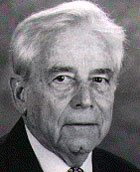
According to John Stern, Ph.D., professor emeritus of psychology at Washington University in St. Louis, and pioneer of blinking research, there is solid evidence that people blink frequently at points in time when they momentarily stop taking in and processing information.
“When people are apprehensive, they blink more frequently, as well as when they are tired,” said Stern, a member of Washington University’s Center for Security Technologies, an interdisciplinary think tank devoted to developing innovations to address our nation’s security problems. (http://cst.wustl.edu/) “There are other gaze control measures that my collaborators and I study, including eye movements, changes in pupil diameter, and minor head movements.
“People watching the debates might be able to form a judgment over which candidate they prefer, in part by watching their eyes. But there’s no guarantee of what the blinking might mean. There is no physical measure that uniquely defines any one psychological process. We are all different in our physical response to psychological challenges.”
In the first presidential debate in Miami on Sept. 30, President Bush, in addition to exhibiting well documented physical mannerisms such as grimacing, frowning, smirking, and pursing his lips, also rapidly blinked throughout the debate. His opponent, Senator John Kerry, had fewer physical mannerisms and less blinking episodes. Most polls show that Kerry won the debate.
While Stern could not view the debate on Sept. 30 because of a prior commitment, he has reviewed tapes of the debate and said the mannerisms of the candidates were quite revealing.
“President Bush appeared more uncomfortable in the debate than was true of his opponent,” said Stern. “Though I am biased and a supporter of Kerry, I wonder to what extent the belief of viewers and the press that Kerry won the debate was a function of the content of what was said or the mannerisms exhibited by the participants.”
Stern said that, based on content as well as behavior, Bush appeared to be better prepared for the October 8 debate held at Washington University in St. Louis.
“Bush spent most of his time while speaking facing the audience while Kerry, especially when responding to comments, frequently faced Bush,” Stern said. “Bush did what he does well, attempting to charm the audience, while Kerry frequently faced his ‘accuser’ while responding to his comments.
“We had little opportunity to watch either face while the other was speaking. There were a few instances when the camera caught Bush while Kerry was speaking. One of these moments came when Kerry was attacking Bush’s taxation plan. Bush did a lot of blinking during that brief period – about 31.50 minutes into the debate.”
While Stern does not consider himself an expert in non-verbal behavior, he noted Bush’s impatience during the second debate.
“He (Bush) frequently started speaking before invited to do so by the moderator, and when it came to making the closing statement the moderator apparently erred and gave the floor to Kerry as the first speaker,” he said. “Bush had some difficulty containing himself and appearing gracious in allowing Kerry to speak first.”
Stern’s specialty is psychophysiology, a branch of psychology that involves using physiological measures to make inferences about psychological variables, such as how people process information. This enables him and his collaborators to determine if their subjects are alert and attentive. When people are alert and attentive, Stern has discovered, they usually anticipate events, and when they anticipate, the heart surprisingly slows down.
Stern is using this discovery in his research for the Center for Security Technologies. He, in collaboration with other researchers at Washington University, is looking at possibilities of remotely monitoring biological signals other than the eye with a technique called Laser Doppler Vibrometry. He is conducting alertness and attention experiments in which they monitor heart rate, a possible indicator of a person’s state of mind.
“As psychophysiologists, we can use this and other physical signals to make inferences about aspects of human behavior,” Stern said.