WU Home | News & Information Home | Email Us

N E W S   H I G H L I G H T S

January 1 through March 31, 2001

Contact: Donna Kettenbach
(314)935-5254

Joni Westerhouse (Medical Public Affairs)
(314) 286-0120

Washington University faculty and staff make news around the world. Following is a representative sampling of media coverage from 587 clippings and electronic sources received between January 1 and March 31, 2001.

It's a Boy! No Wait. It's a Girl!: Scientists studying lung disorders have discovered that a common growth factor helps determine gender in mice. By deleting a gene, researchers inadvertently created mice with female reproductive systems, even though they carried a Y chromosome. Molecular biologist and pharmacologist Dr. David M. Ornitz stated the work could lead "to better understanding of embryonic development and sex determination disorders, which will hopefully guide new therapies." New Scientist, Hartford Courant, Associated Press, United Press International, AScribe Newswire

When does Alzheimer's Begin?: Alzheimer's may begin much earlier than previously thought. Researchers at Washington University suggest mild cognitive impairment, or MCI, which is characterized by repeated lapses in short-term memory, may in fact be the earliest stage of Alzheimer's disease in many patients. Time, Archives of Neurology, Investor's Business Daily, CBS Osgood Files, CBS Morning News, CBS Evening News, AScribe Newswire

The Energy Crunch and the Pain at the Pump: Craig Pirrong, assistant professor of finance at the Olin School, wasn't surprised when the Federal Trade Commission cleared the oil industry of colluding to raise prices at the pumps. "That is the way the market works," said Pirrong, who was widely quoted as an expert on California's power shortage and energy levels in the western United States. Chicago Tribune, Energy Report, Gas Daily, Investor's Business Daily, Washington Times, Associated Press, Capital Times (Madison, WI), Charleston Gazette (West Virginia), Florida Times-Union, London Free Press (Ontario, CA), Telegraph Herald (Dubuque, IA), Santa Fe New Mexican

Washington University places in Top 10 for nine categories of U.S. News rankings: (* indicates a tie) Washington University School of Medicine ranked fourth overall and first in student selectivity, according to this year's U.S. News & World Report rankings of graduate and professional programs. The medical school also ranked 3rd* in the nation for occupational therapy, 5th in internal medicine, 7th for pediatrics, 10th* for women's health and 10th* for drug/alcohol abuse. The School of Law jumped two places to 27* in the nation, as did the political science program in the College of Arts & Sciences, moving up to 18*. The Olin School of Business MBA program, tied with Vanderbilt University and the University of Rochester for 26, is in the top tier of the nation's 325 accredited MBA programs. The Henry Edwin Sever School of Engineering and Applied Sciences moved up three places to 37*. Arts & Sciences' clinical psychology program ranked 19* while its psychology program ranked 39*. U.S. News and World Report, U.S. News and World Report Magazine, U.S. News and World Report Best Graduate Schools, U.S. News Website
The Washington University rankings can be viewed at
http://64.37.116.251/rankings/gradranking.html
or on U.S. News' Web site,
http://www.usnews.com.

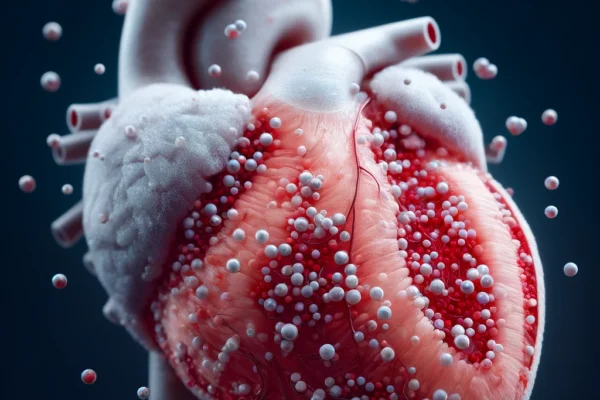
Depression and Fatal Heart Attacks: Depressed heart attack patients are about twice as likely as the non-depressed to fall into the range of heart rate variability that's predictive of death, according to Robert Carney of the Washington University Medical School. Depression triggers a rise in stress hormones, which lowers heart rate variability. USA Today, Tulsa World, AScribe Newswire

Olin School MBA's: The Olin School has made major changes to its MBA Program since Stuart Greenbaum became dean, including grouping students, creating minisemesters, and adding weekend classes. As a result, Olin's graduation rate today is close to 90%. Business Week

Cloning Concerns: In a letter to the editor, Rebecca Dresser, professor of law and ethics in medicine, reminds readers of the distance between exciting discoveries and human applications. "Developing therapeutic interventions is inevitably a slow and difficult process." New York Times

Bush Balance is Better: Kenneth Chilton, distinguished fellow at the Weidenbaum Center on the Economy, Government and Public Policy, believes Bush is striking a needed balance between protecting the environment and protecting consumers' energy options. "President Bush deserves kudos, not curses, for setting a better course for balancing energy and environmental concerns." Knight Ridder/Tribune, Houston Chronicle, Ventura County Star (California)

Genetics and Individualized Treatment: An international team of researchers led by professor Howard McLeod has carried out DNA tests on 1,280 people of 10 different ethnic backgrounds, and has found genetic variations by race that affect the way people respond to cancer drugs and other medicines and treatments. The findings will help doctors tailor treatments to an individual patient's genetic profile. AAP Newsfeed (Australia), Irish Times, The Times (London), Toronto Star

Mars - A Brief, Shining, and Wet Moment: Planetary scientists believe that during the Noachian Epoch, extensive volcanic activity on Mars created a warm and wet atmosphere, unleashing enough water to dig valleys across the planet. Science, Canberra Times (Australia), Investor's Business Daily, United Press International, Agence France Presse

Reducing Depression Relapses: Patients who recover from depression after shock treatments were found less likely to relapse when the treatments were followed by anti-depressant drugs. Washington University will participate in an upcoming study to see if beginning drug treatments during the electroshock treatment will cut the relapse rate even further. Pittsburgh Post-Gazette

Nanotech News: Mechanical engineering professor Richard Axelbaum uses flame inside a tubular flow reactor and a reduction of metal halides to produce metals and ceramic nanoparticles that are between 10 and 60 nanometers wide. Axelbaum's patented technique offers the possibility of producing significantly smaller capacitors than are currently available. Financial Times (London), Electronic Times, United Press International

Laser Heart Surgery: The use of lasers in heart surgery remains controversial. Some believe it profoundly relieves the chronic chest pain of angina; others that it is nothing more than an expensive placebo. Cardiologist John Lasala recalled an 80-year-old patient who couldn't even wash himself. "Then I got calls from family members the next week saying, 'Dad's out gardening.'" Milwaukee Journal Sentinel, Sunday Advocate (Baton Rouge), Sunday Gazette Mail (Charleston, WV), Associated Press

Oceans on the Moons of Jupiter: Combining images from the Galileo and Voyager space missions, planetary scientists have found signs of oceans beneath the surface of two of Jupiter's moons. Subsurface oceans are possible because ordinary ice is less dense than water, and so forms at the surface. "You just need some sort of antifreeze", such as ammonia or salt to keep the liquid layer from freezing, says Bill Mckinnon, professor of earth and planetary sciences. New Scientist, The Hindu (India), Canberra Times (Australia), Nature (England), City News Service (Los Angeles), AScribe, Calgary Herald, Daily Telegraph (London)

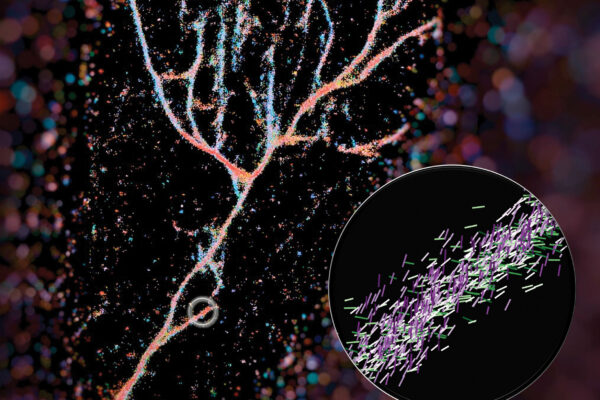
Smart May Not Be All It's Cracked Up To Be: A protein in the brain that enhances learning and memory function in mice also may enhance perceptions of chronic and persistent pain, according to Min Zhuo and his colleagues at the School of Medicine. The protein, called NR2B, makes mice more aware of minor pain for longer periods of time. In other experiments, that same protein was found to be responsible for enhanced learning and memory in so-called "smart mice." Researchers think the extra NR2B may simply help mice sense all things better and could help them to avoid painful events, but when those events are unavoidable, the protein seems to contribute to higher levels of discomfort. Bioworld Today, Boston Globe, New Scientist, Associated Press, South Bend Tribune, American Health Line, Pittsburgh Post-Gazette, Scripps Howard News Service, Washington Post, Agence France Presse

Baby Talk: Children younger than 15 months learn words more quickly when their parents say them frequently and by themselves. Such isolated words form the foundation for early vocabulary learning, according to a Washington University study that challenges recent theories that infants learn language by hearing sentences and segmenting them into individual words. Dr. Michael Brent, a computer scientist at WU, found that mothers instinctively used quite a few words in isolation. Time, Daily Telegraph (London), Ottawa Citizen, Vancouver Sun, San Francisco Chronicle, San Diego Union-Tribune, United Press International

Kids & Stitches & Gas: A study from Washington University School of Medicine suggests that nitrous oxide may be more effective in reducing a child's anxiety when needing stitches than the medications usually prescribed. Lead author Dr. Jan D. Luhmann said that while suturing has become almost painless, "anxiety during both wound preparation and suturing continues to be a significant problem." New York Times, Annals of Emergency Medicine, Chicago Tribune

Unions Oppose TWA Takeover: Three American Airlines unions are opposing the purchase of TWA. Law professor Neil Bernstein says the unions "cannot legally stop the merger from going through. They can only make it very annoying." Dallas Morning News, Newsday (New York)

A roundup of appearances and op-ed commentaries from the Center for the Study of American Business: Russell Roberts appeared on National Public Radio's Morning Edition with suggestions for President Bush on how to sell his tax-cut program to Americans. Murray Weidenbaum published an opinion piece in the Christian Science Monitor on how Congress has deadlocked US trade policy. Dwight R. Lee co-authored an article in USA Today Magazine on technology, competition and antitrust enforcement. The Sacramento Bee cited the Center's research on punitive damage awards. The Detroit News cited a Center study by Robert Batterson and Murray Weidenbaum that reported that concerns about globalization are real. While more people will be helped than hurt, economic gains are not being equally shared. The Seattle Times cited the Center report, which found that between 1980 and 1998, developing countries saw their external debt as a percentage of gross domestic product jump from about 6% to over 18%, and that the global economy grew 140% from 1970 to 1998. Asia led with 352% growth, while Russia fell 14%. An article for the Copley News Service also covered the CSAB report.

What's Doing In DNA: Scientists now believe humans have only about 30,000 genes, far fewer than the 100,000 or more that many experts had expected. Still, recent discoveries are stunning. Dr. Robert Waterson, chief of the Washington University Genome Sequencing Center said "Just to think about it in terms of having this instruction book that's telling us all the things that are going on in evolution is really awesome." Newsweek, Chicago Tribune, Dallas Morning News, Nature, Christian Science Monitor, Los Angeles Times, Ottawa Sun, San Antonio Express-News, Deseret News (Salt Lake City), New York Times, United Press International, Seattle Times, Washington Post, AScribe Newswire

Cheney's Heart: During Vice President Cheney's latest heart procedure, political observers noted that he would be hard to replace. "The loss of Cheney would have a huge impact on the Bush White House because he seems to have been put in charge of virtually everything since the election" said Wayne Fields, Director of American Culture Studies. Star Tribune (Minneapolis)

Latest Fitness Fad: Wandering is being touted as the ultimate way to firm muscles, shed pounds, and energize your inner spirit É all at the same time. Washington University researchers found that even a 10 minute wander left subjects feeling more relaxed and energetic. The craze is spreading from the US to Britain. The Express (United Kingdom), The Times (London)

Comet Catastrophe: Scientists say a comet or asteroid smashed into the earth 250 million years ago, triggering the biggest mass extinction in history and killing 90% of species. Luann Becker, acting assistant professor of earth and space sciences at Washington University, said the collision was not directly responsible for the extinction, but it prompted a series of events such as massive volcanic activity, changes in ocean oxygen, sea level, and climate, which in turn led to extinction on a huge scale. The Herald (Glasgow), The Scotsman

Clinical Research Guidelines Drafted: The deans of some of the nation's leading medical schools, including Washington University, Harvard, Baylor, Columbia, Johns Hopkins, Yale, University of Pennsylvania, University of Washington, and University of California at San Francisco and Los Angeles have drafted strict new conflict-of-interest guidelines designed to protect study subjects and ensure the integrity of clinical research. Boston Herald, Chattanooga Times / Chattanooga Free Press, Associated Press, AScribe Newswire

Tiny Particles Pose Big Problems: The problem of particulate pollution isn't limited to cities and suburbs. Engineer Jay Turner set up monitors in Illinois and found up to ten times more particulate matter in rural areas, where there is more soil dust and more diesel-powered vehicles. National Wildlife

Unwell Welders: Fumes generated during welding may accelerate the onset of Parkinson's disease, according to a study led by Brad Racette. Parkinson's developed 15 years earlier for welders studied. Racette and his team are studying potential environmental triggers for the disease. New Scientist, Dallas Morning News

Pros Approve President's Speech: Experts in political communication assessed Bush's address to Congress. American Culture Studies Director Wayne Fields said "The tone was reminiscent of Clinton and Reagan. He was self-deprecating and affable." Fields said Bush showed he was good natured and serious about working with Democrats. USA Today, Associated Press

Big Losers: Obesity experts say losing enormous amounts of weight is mind-boggling for many patients, and only a handful succeed. "It's extremely difficult to lose that much weight" said Samuel Klein, Director of the Washington University Weight Management Center. "Obesity is a chronic disease." USA Today, Asheville Citizen-Times, Ottawa Sun

Where We Came From: DNA advances are shedding light on the wanderings of early humans. Since 1997, researchers have managed to extract mitochondrial DNA from three Neanderthal skeletons. The genes appear to have diverged from the human lineage about 500,000 years ago. But in 1998, the skeleton of a child with both human and Neanderthal features was found in Portugal. Anthropologist Erik Trinkaus, who is researching the find, says the 24,500-year-old bones are clear evidence of admixture. U.S. News & World Report

Cell Phones - Please Call Back Later: Two multiyear cellular phone studies have found no association between cellular phone use and brain tumors, but experts are still split. Joseph Roti Roti found that cell phone radiation could damage DNA in mouse cells. "All the data is not in. We do see something. We need to follow up." Washington Post

Slowing Economy Can Kill Even Established Firms: It isn't just the dot-coms that are failing. Companies seeking bankruptcy protection include such old economy luminaries as Vlasic, Converse, Montgomery Ward and Sunbeam. "There is this threshold point", said organization and strategy professor Todd Zenger. "As the economy goes soft, you pass that threshold." Dallas Morning News

Bronchitis & Asthma Linked: Scientists have discovered a telling link between mice with bronchitis and people with asthma. Both churned out large amounts of IL-12 p40, a protein which inflames airways. According to lead researcher Michael Holtzman, asthma may be caused by the body overreacting to a viral infection. Traditionally, physicians believed asthma was caused by an allergic reaction and a weakened response to respiratory viruses. The finding could offer a new target for drugs to quell asthma. New York Post, Journal of Experimental Medicine, United Press International

Venus May Have Been All Wet: New evidence shows the planet Venus may have been wet at one time. Researchers at Washington University studied the mineral tremolite, that forms in the presence of water, hangs around for billions of years, and can withstand extremely high temperatures. Water-forming minerals such as tremolite should be detectable using current technologies such as infrared reflectance spectroscopy. Icarus, United Press International

Defining Clinton's Legacy: Clinton leaves behind a personal and political legacy as rich and contradictory as any in American history. "He's been, I think, the first civil rights generation president," said Wayne Fields, Director of American Culture Studies. "This is a connection of heart and soul. Clinton's understanding of his time has really been built out of civil rights." Cox News Service, Chattanooga Times / Chattanooga Free Press, Dayton Daily News, Palm Beach Post, Atlanta Journal and Constitution

Nestle/Ralston Purina Merger: Nestle S.A.'s $10 billion purchase of Ralston Purina would create a pet food empire that dominates both the cat and dog food market. "It seems like a brilliant acquisition," said business professor Jack Nickerson. "Instead of running two different operations, they can simply do one." Chattanooga Times / Chattanooga Free Press, Associated Press, Commercial Appeal (Memphis), Florida Times-Union, Orlando Sentinel, The Record (New Jersey)

Dred Scott Online: The Missouri State Archives has teamed with Washington University and the St. Louis Circuit Court to put 170 pages from the landmark Dred Scott slavery case online. Atlanta Journal and Constitution, Florida Times-Union, National Journal's Technology Daily, Pittsburgh Post-Gazette, Star Tribune (Minneapolis), Telegraph Herald (Dubuque, IA), Associated Press, Charleston Daily Mail (West Virginia)

Dr. William H. Masters dies: Dr. Masters, pioneer of sexual research, has died from complications of Parkinson's at age 85. Dr. Masters joined the Washington University School of Medicine faculty in 1947, where he specialized in obstetrics and gynecology, and co-founded the Masters and Johnson Institute, studying human sexuality. Masters and Johnson's ground-breaking book, Human Sexual Response, became a best seller. The Herald (Glasgow), Manchester Guardian Weekly (England), Irish Times, The Scotsman, The Times (London), Vancouver Sun, ABC World News Tonight, ABC World News Now, Associated Press, The Guardian (London), Atlanta Journal and Constitution, The Independent (London), Los Angeles Times, Newsday (New York), Orlando Sentinel

TWA's Bankruptcy Filing: Finance professor Todd Milbourn commented on speculations raised when Icahn reportedly bought up much of TWA's outstanding debt. "For him, this is just free money on the table," Milbourn said, with Icahn seeking a better seat at the bargaining table in bankruptcy court. Associated Press Chattanooga Times / Chattanooga Free Press, Florida Times-Union.

Stroke Research: Researchers at the Washington University Medical Center in St. Louis have found that a new therapy technique allows stroke patients to regain arm movements, even if the therap doesn't begin until several days after the stroke has occurred. WTFX-TV, Philadelphia, WINK-TV, Fort Myers, Fla., Med Star "Advances" (syndicated), WTHR-TV, Indianapolis, NBC Newschannel (all NBC affiliates), WVTM-TV, Birmingham Alabama, KCBD-TV, Lubbock TX Soldier's Radio and TV, national and international Armed Forces network

###


    WU Home | News & Information Home | Email Us