Record current issueFlag at half staff

Gargoyle

  -  Faculty Experts


  -  News by Topic

  -  News by School


Search News & Info


WUSTL in the News
  - Powered by Google


WUSTL Home

Public Affairs Home

News
Releases

University News

Medical News

Sports News

Radio Service

Tip Sheets

Business, Law & Econ

Culture & Living

Science & Technology
Media Resources
Contact Information

TV/Radio Studio

Visiting Our Campuses

Campus Images

Sports photography
Commercial Filming
   and Photography


Commercial Use of
   Names and Symbols

Domain Name policy
WUSTL Information
Record (newspaper)

Campus Calendars

WUSTL News Summary

Publications Online

Facts, Guides & Maps


Washington University in St. Louis News & Information > University Groups > School of Engineering & Applied Science >

Computer Communications Research Center

Director: Mark Franklin

Home Page: http://www.ccrc.wustl.edu/

Location: 405F Bryan Hall

Founded in 1979, the Computer and Communications Research Center (CCRC) is an interdepartmental research center which includes faculty and graduate students from both the Computer Science (CS) and Electrical Engineering (EE) Departments. CCRC provides an interdepartmental research environment in the areas of computer and telecommunications systems design. Graduate students (24), faculty (6) and staff (4) are drawn from both the CS and EE Departments. CCRC has substantial computational resources, including over 35 file servers and workstations and a 20 processor SUN SC2000 multiprocessor system. Extensive VLSI, chip, board and system level hardware design and test capabilities are also available.


News Stories & Tip Sheets:

Showing Stories 1 through 3 of 7.  - Show More
'Not your father's computer science class'

Grant allows computer science to explore active learning

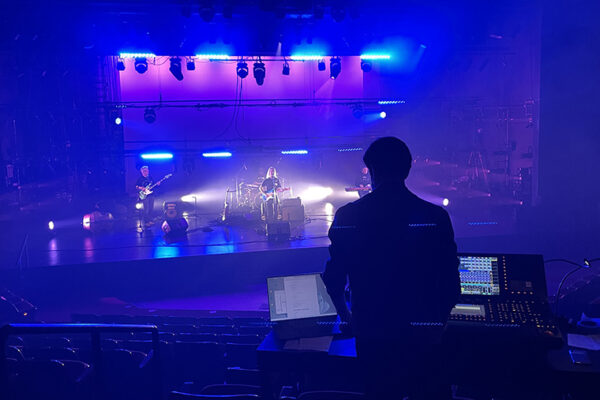
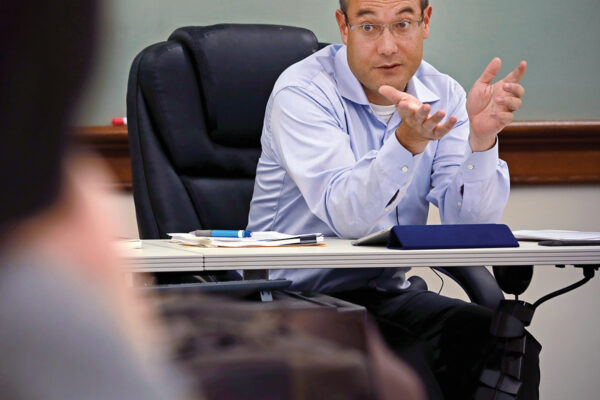
Feb. 23, 2009 -- Computer science faculty at Washington University in St. Louis are exposing their undergraduate students to learning in ways that prepare them for interaction in the real work place. It's not about "staying between the lines," but more about getting out of your seat, moving around and interacting with your classmates. It's called active learning, a learning-laboratory- based tutorial teaching concept.


Partnership reaching students on a national level

Research-based undergraduate course expands beyond WUSTL

Nov. 25, 2008 --
Sarah Elgin
Elgin
Download
Washington University in St. Louis is in the spotlight for its pivotal role in the Genomics Education Partnership, a collaborative effort to provide research experience in genomics to undergraduate classrooms across the country. At the helm of this mission is Sarah C.R. Elgin, Ph.D., WUSTL professor of biology and professor of education in Arts & Sciences, as well as professor of biochemistry & molecular biophysics and professor of genetics in the School of Medicine.


Networking, managing information for the military

Novel network is proposed for Department of Defense

Aug. 6, 2008 --
Image courtesy U.S. Army
WUSTL's Patrick Crowley is proposing a novel network for the U.S. Department of Defense (DoD) to manage information better simultaneously in real-time.
Patrick Crowley, a WUSTL computer architect, intends to design a new kind of network for the Department of Defense (DoD) to facilitate real-time information in the field so that every foot soldier, commander, tank and transport vehicle is networked. Crowley will use the WUSTL programmable network platform that can scale real-time information sharing over several orders of magnitude, from a handful of interconnected platforms to thousands and tens of thousands. He hopes to facilitate better information sharing in the military.


Showing Stories 1 through 3 of 7.  - Show More

Faculty Experts:

Showing 1 Experts.
Christopher Gill

Associate Professor of Computer Science & Engineering

Gill
Download

Gill received his doctorate from Washington University. He is widely published and holds research interests in real-time, fault-tolerant, secure, and embedded middleware hybrid static/dynamic resource management, adaptive and reflective distributed systems, distributed object computing, real-time ...


Expertise: middleware, cybersecurity, changing environments, real-time behavior

Direct contact: (314) 935-7538 / cdgill@wustl.edu


Showing 1 Experts.
Related News Clips:

Showing 1 Clips.
Your PC is also playing FBI role!
India Times, Portsmouth Herald News (NH) and 18 others

Aug. 19, 2005 -- With uncanny accuracy, computers predict behavior by sifting through mountains of data about customers collected by businesses. Called predictive analytics, this automated crystal-ball gazing has become a $2.3 billion industry in the United States.
WUSTL marketing professor Amar Cheema comments.


Additional Information:

Center research covers a broad range of topics which fall under the discipline of Computer Engineering and are at the interface between CS and EE.

Research efforts at the Center have focused on the design of novel computer architectures and advanced computer and telecommunications systems. The Center has aimed at bringing together algorithms, computer architecture, and hardware and software components to fully exploit new possibilities in basic digital technology, and in particular the challenges presented by VLSI technology. Research areas rest primarily at the interface between CS and EE. The research is generally applications- driven and current projects include the design of high- performance ATM switches, the design of distributed computing and multimedia systems, investigation into parallel simulation techniques, analysis and design of load balancing, synchronization and latency hiding techniques for distributed computing systems, evaluation of distributed checkpointing techniques, load and traffic control analysis and algorithm design for large telecommunications networks, and related issues.

CCRC has a history of successfully undertaking government (e.g., NSF, ONR, DOD, ARPA) sponsored research in a variety of areas. Current funding derives mainly from NSF, ARPA, and from our Industrial Partnership Program (IPP) whose members include Ascom Timeplex, Bellcore, Goldstar, Italtel, NEC America, NTT, and SynOptics.

CCRC also has an educational component. Most of the faculty teach courses in the computer engineering and telecommuications areas. About two dozen graduate students also participate in research activities, Finally, CCRC is the home for two degree programs:

1. COMPUTER ENGINEERING: This undergraduate degree program is administered through CCRC. Undergraduates proceeding through this program take courses in CS and EE and are prepared to deal with both hardware and software issues associated with computer engineering. On completion of the program students receive a B.S. in Computer Engineering.

2. NETWORKING AND COMMUNICATIONS PROGRAM: This graduate program is administered through CCRC. Graduates participating in this program take hardware, systems and software courses in EE and CS which prepare them work in the field of networking and communications. On completion of the program students receive a M.S. in either C.S. or E.E.


Related Information
Media Assistance:

Diana Lutz
Senior Science Editor
dlutz@wustl.edu

(314) 935-5272
Contact Information

Related Links:
Department of Computer Science and Engineering Web page
Mark Franklin Web page

Related Groups:

Schools:
Arts & Sciences
School of Engineering & Applied Science

Departments:
Computer Science and Engineering
The Preston M. Green Department of Electrical and Systems Engineering

- View All Groups

Related Topics:
Computer Technology

- View All Topics

Revised:

Thursday, Dec. 2, 2004


  Email this page

  Print ready page


News & Information  |   Medical News  |   Office of Public Affairs  |   WUSTL Home

Please contact us and let us know how we can assist you.
Technical problems with this Web site? Email questions or comments.
Please review the WUSTL News & Information copyright/privacy policy.